
Brique / Iberian Wanderings 04
시민에게 사랑받는 축구 클럽과 채석장 위에 세워진 경기장 A Football Club Beloved by Its Citizens and a Stadium Built Above a Quarry
Series Note
이베리아반도 유랑기 Record of Wanderings in the Iberian Peninsula
오래전부터 막연히 가보고 싶었던 포르투와 알함브라. 두 도시를 지도에 핀으로 찍고 출발한 여행, 단 하나의 숙소만 예약한 채 아무런 정보 없이 길을 떠났다. 그래서 어쩌면 여행보다 ‘유랑’에 가깝다. 이 글은 대서양 해안을 따라 남쪽으로, 다시 지중해를 따라 동쪽으로 나아가며 포르투갈과 스페인, 그리고 남프랑스의 25개 도시와 지역을 64일 동안 거닐며 기록한 유랑일지다.
This series begins with two cities I had long dreamed of visiting, Porto and the Alhambra. I set out with little more than two pins on a map and a single hotel booking, carrying almost no information and no fixed itinerary. Perhaps that is why this journey feels closer to wandering than to travel. What follows is a journal of 64 days spent moving south along the Atlantic coast and then east along the Mediterranean, across 25 cities and regions in Portugal, Spain, and the south of France.
요약 Summary
포르투에 머물던 중, 에두아르두 소우토 데 모우라가 설계한 브라가 시립 경기장을 직접 보기 위해 브라가로 향했다. 포르투에서 버스로 1시간 남짓 걸리는 이 도시를 찾은 이유는 단 하나, 건축물 자체가 강하게 눈에 들어왔기 때문이다. 여행의 동선보다 건축의 존재감이 먼저 목적지가 된 드문 경우였다.
브라가 시립 경기장은 지역 클럽 SC Braga가 사용하는 시립 경기장으로, 공공예산과 EU 기금, 민간 투자를 통해 건설되었다. 그러나 막대한 건설비와 유지관리비는 도시 재정에 큰 부담을 남겼고, 시의회는 2023년 매각 계획을 발표했다. 이 경기장은 단지 축구장의 기능을 넘어, 공공성과 재정, 도시 상징성이 충돌하고 교차하는 복합적인 건축물로 읽힌다.
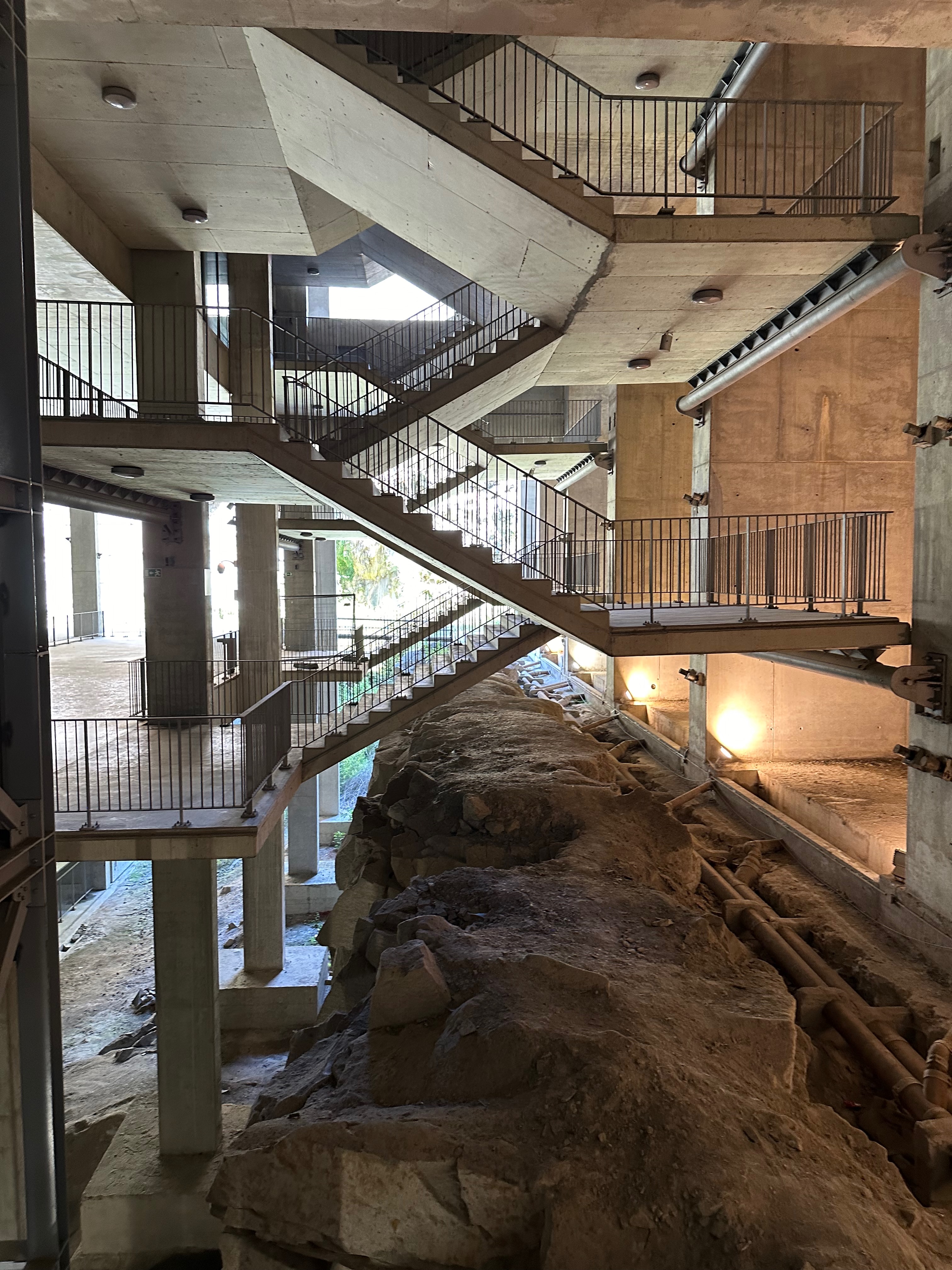
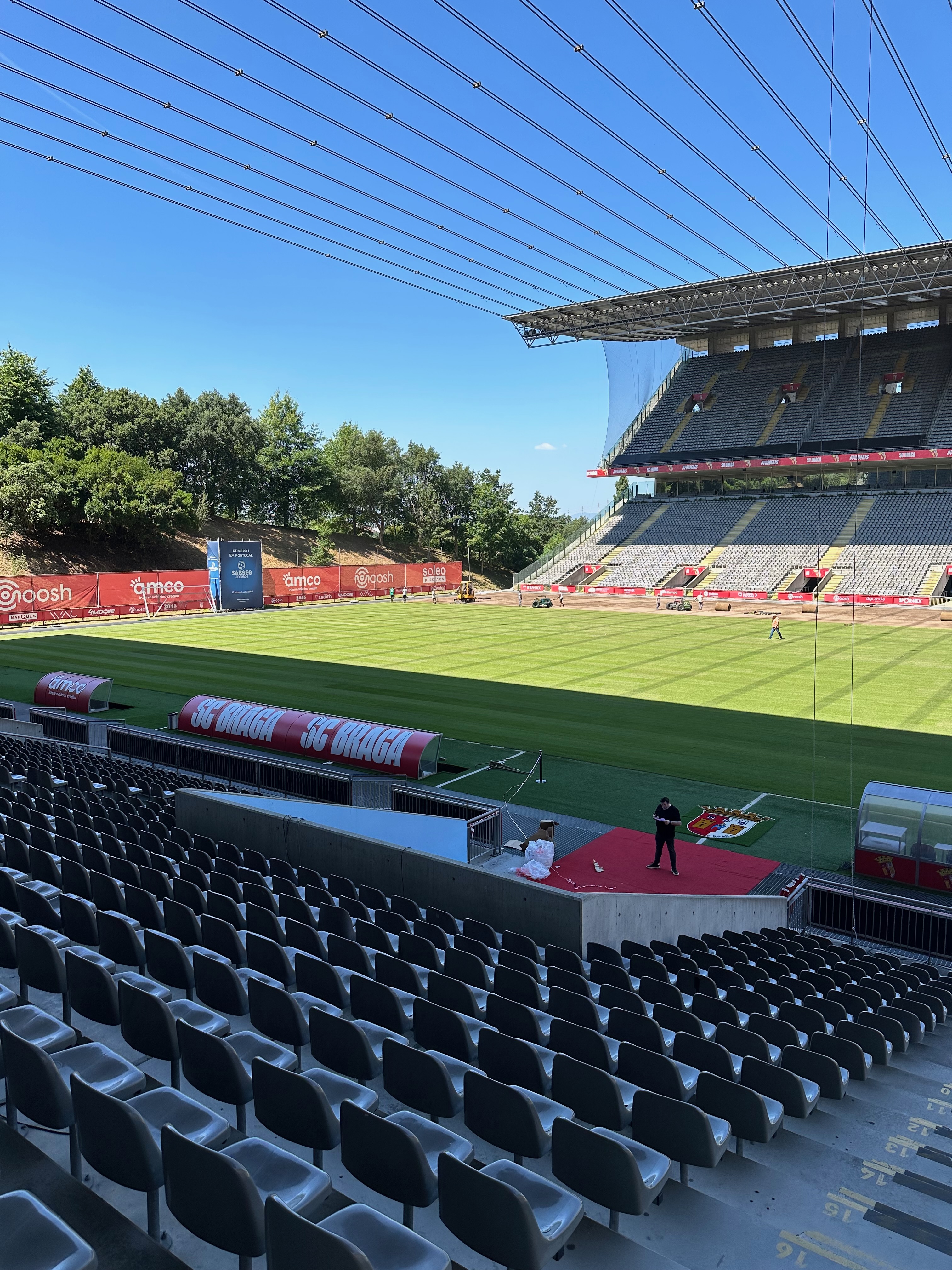
무엇보다 이 경기장의 독창성은 옛 석회암 채석장 위에 구조물을 그대로 얹어 놓은 건축적 태도에 있다. 시민들이 경기장을 ‘페드레이라’, 곧 채석장이라 부르는 이유도 여기에 있다. 개방된 골대 뒤편, 와이어 지붕, 노출 콘크리트, 암반과 맞붙은 공간들은 경기장이 주변 지형을 지우지 않고 오히려 그것을 건축의 본체로 끌어들였음을 보여준다. 짧은 가이드 투어였지만, 경기장을 나선 뒤 곧바로 떠나지 못하고 여운을 안은 채 시내까지 걸어가게 만든 것은 바로 그 공간감이었다.
While staying in Porto, I made my way to Braga for one clear reason: to see the Braga Municipal Stadium by Eduardo Souto de Moura with my own eyes. Just over an hour away by bus, the city became a destination not because of itinerary logic but because the building itself had already fixed itself in my mind.
Operated by the local club SC Braga, the stadium is a municipal structure built through a mix of public funding, EU support, and private investment. Yet it also carries the burden of enormous construction and maintenance costs, which eventually led the city council to announce plans for its sale. In that sense, the building is not only a sporting venue but also a civic object shaped by questions of public value, financial strain, and urban identity.
Its architectural force lies in the way it sits on the site of a former limestone quarry, earning the local nickname A Pedreira, the Quarry. Rather than erase the terrain, the design turns it into the stadium's defining condition: exposed rock, open ends behind the goals, raw concrete, and cable-supported roofing all make the landscape feel inseparable from the building. The guided tour lasted only an hour, but the spatial intensity lingered long after, enough that I chose to walk back to the city center instead of leaving immediately.
Credit
Text, Photo. 최성우 Sungwoo Choi
Edit. 김태진 Taejin Kim